
Li Ka-shing's Business Empire
Li Ka-shing's Business Empire: Lessons for Ecommerce Entrepreneurs in 2026
Li Ka-shing, often called "Superman" in Hong Kong, has built one of Asia's most formidable business empires with significant holdings in retail, telecommunications, and infrastructure. With a net worth exceeding $35 billion, this self-made billionaire started from humble beginnings and transformed CK Hutchison Holdings into a global powerhouse that touches millions of consumers daily.
For ecommerce entrepreneurs, Li's journey offers invaluable insights into scaling businesses, diversification strategies, and long-term value creation. His retail holdings span from traditional brick-and-mortar operations to modern digital commerce platforms across Asia and Europe. Understanding his business philosophy and strategic decisions can provide actionable lessons for growing your online business in today's competitive landscape.
We'll explore Li Ka-shing's current business empire, his approach to retail and commerce, and extract practical strategies that ecommerce founders can apply to their own ventures.
Who Is Li Ka-shing? From Factory Worker to Billionaire
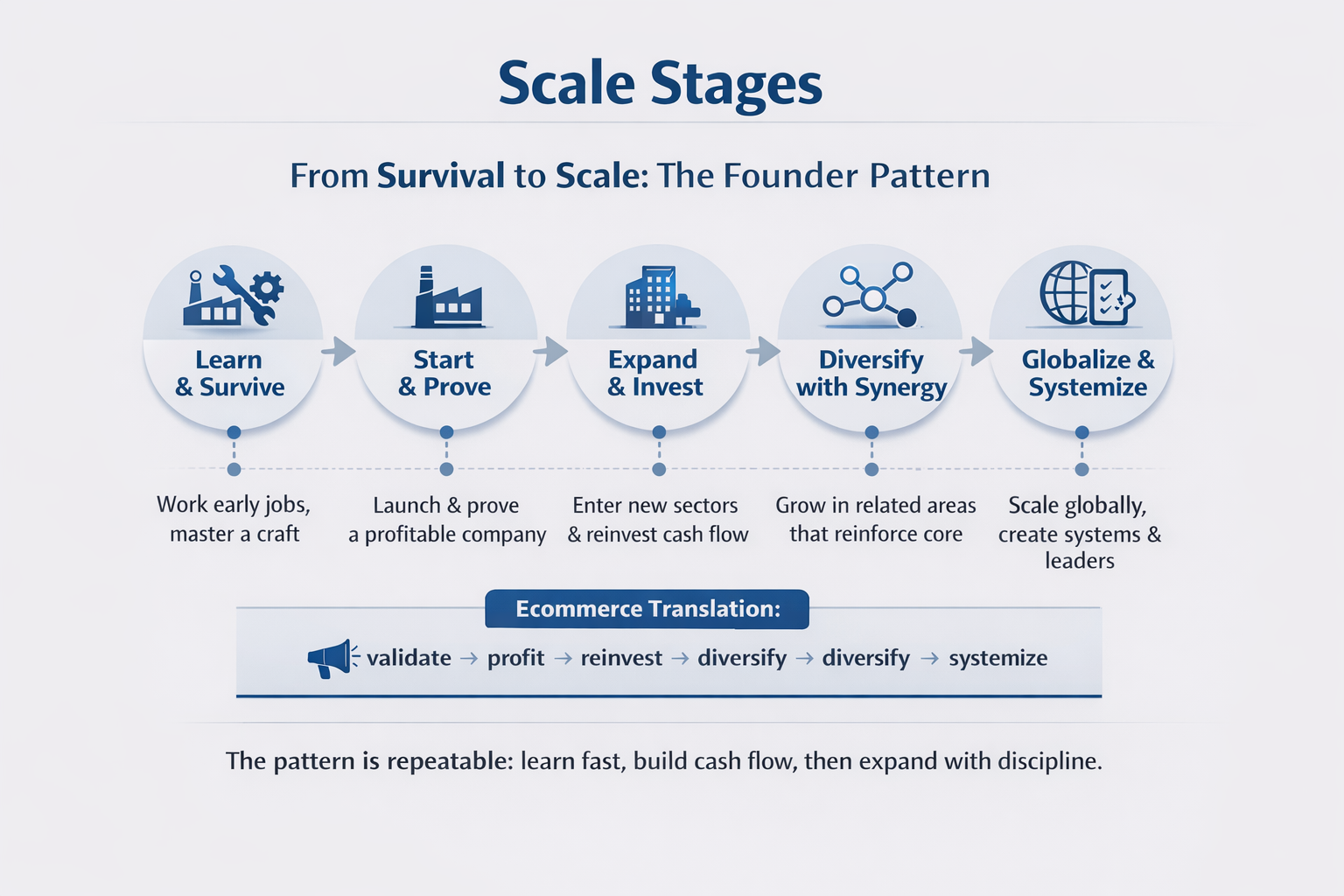
Li Ka-shing was born in 1928 in Chaozhou, China, and fled to Hong Kong during the Chinese Civil War. At age 15, after his father's death, he dropped out of school to work in a plastics factory, supporting his family on meager wages. By 22, he had saved enough to start his own plastics manufacturing company, Cheung Kong Industries, in 1950.
Key milestones in his rise:
- 1950s: Founded Cheung Kong Industries manufacturing plastic flowers
- 1960s-70s: Shifted focus to real estate development in Hong Kong
- 1979: Acquired Hutchison Whampoa, gaining control of ports and retail operations
- 1980s-90s: Expanded into telecommunications, energy, and infrastructure
- 2000s-present: Diversified into global markets while maintaining Asian dominance
His nickname "Superman" reflects his seemingly prescient ability to time market cycles and identify undervalued assets before competitors. Today, at 97 years old, Li Ka-shing remains one of the world's most respected business leaders.
Li Ka-shing's Current Business Empire: A Retail and Commerce Powerhouse
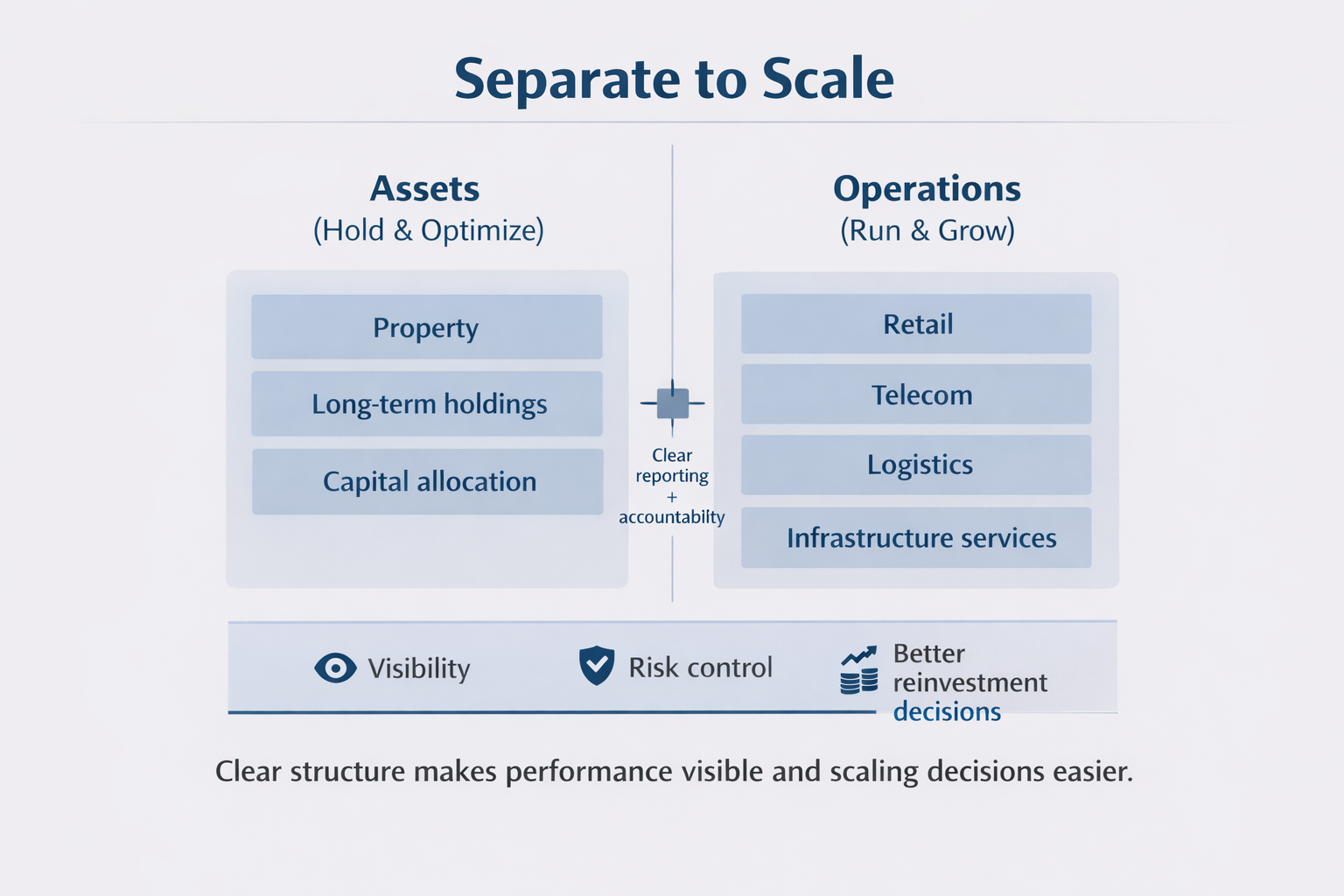
Li Ka-shing's empire operates primarily through CK Hutchison Holdings and CK Asset Holdings, which he restructured in 2015 to separate property assets from operational businesses.
CK Hutchison Holdings: The Commerce Core
CK Hutchison is a diversified conglomerate with five major divisions, several of which directly impact retail and commerce:
1. Retail Division
- A.S. Watson Group: The world's largest international health and beauty retailer
- Operates over 16,000 stores across 28 markets
- Brands include Watsons, Superdrug, Kruidvat, Marionnaud, and more
- Serves over 130 million customers weekly
- Strong omnichannel presence blending physical stores with ecommerce platforms
2. Telecommunications
- 3 Group (Three): Mobile network operator in Europe and Asia
- Provides infrastructure that enables mobile commerce
- Strategic position in the digital economy
- Facilitates millions of ecommerce transactions daily
3. Ports and Related Services
- Operates 52 ports in 26 countries
- Handles approximately 11% of global container port throughput
- Critical infrastructure for international ecommerce logistics and supply chains
4. Infrastructure and Energy
- Powers commerce through utilities in UK, Europe, Australia, and New Zealand
- Enables the digital infrastructure ecommerce depends on
Strategic Retail Holdings
Beyond CK Hutchison, Li has investments in:
- ParknShop: Major supermarket chain in Hong Kong with growing online delivery
- Fortress: Electronics retailer across Asia
- Various property retail centers and shopping malls throughout Asia
Current Empire Valuation: Li Ka-shing's business empire is valued at over $100 billion across all holdings, with retail and commerce operations representing approximately 30-40% of total value.
Li Ka-shing's Business Philosophy: Principles for Ecommerce Success
Li Ka-shing's approach to business has remained consistent over seven decades. Here are his core principles that ecommerce entrepreneurs can adopt:
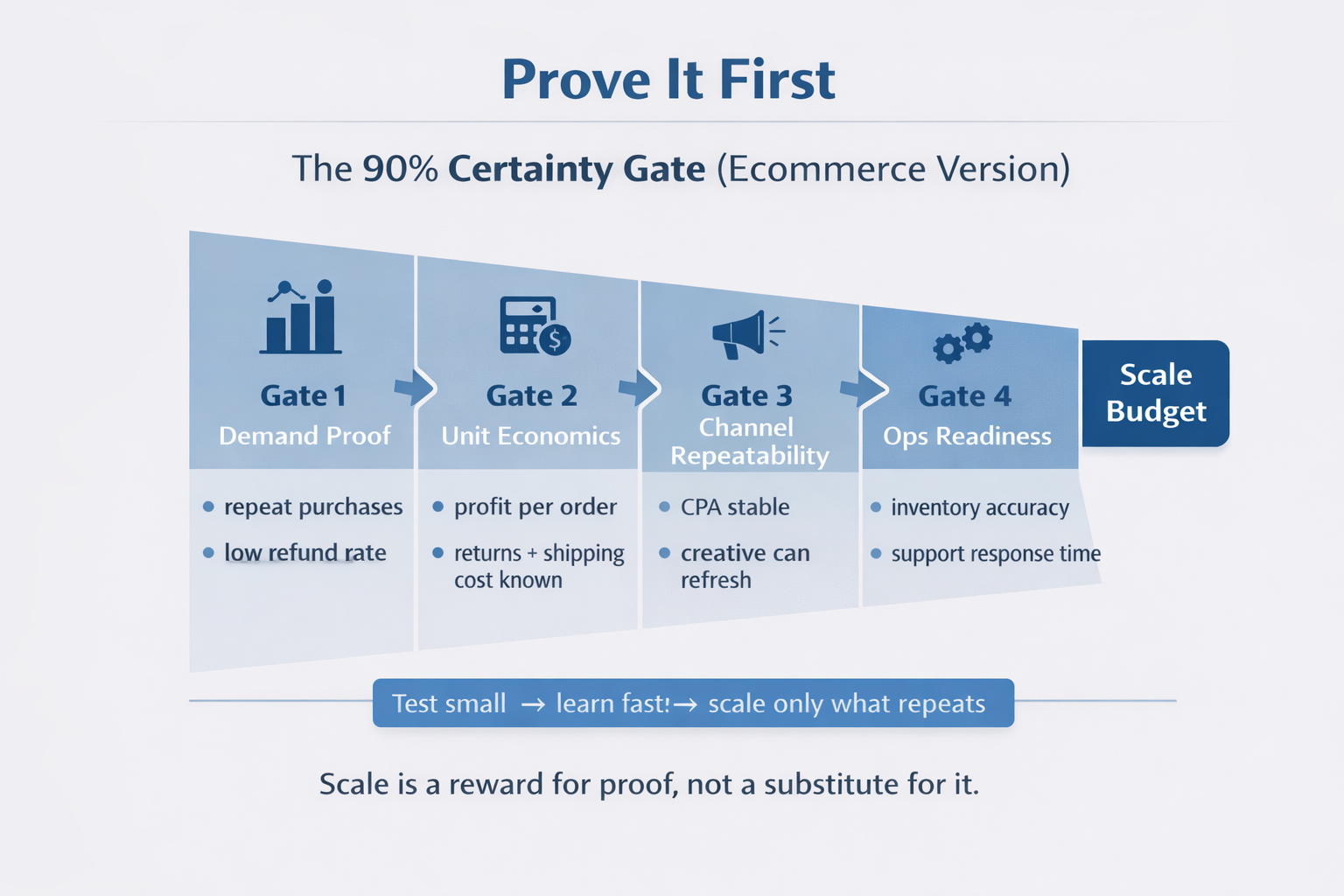
1. "90% Certainty Before Investment"
Li famously waits until he's 90% certain of success before making major investments. He doesn't chase trends or speculate wildly.
For ecommerce entrepreneurs:
- Validate your product-market fit thoroughly before scaling
- Test marketing channels with small budgets before major spend
- Use data and customer feedback to reduce uncertainty
- Don't launch products based on gut feeling alone
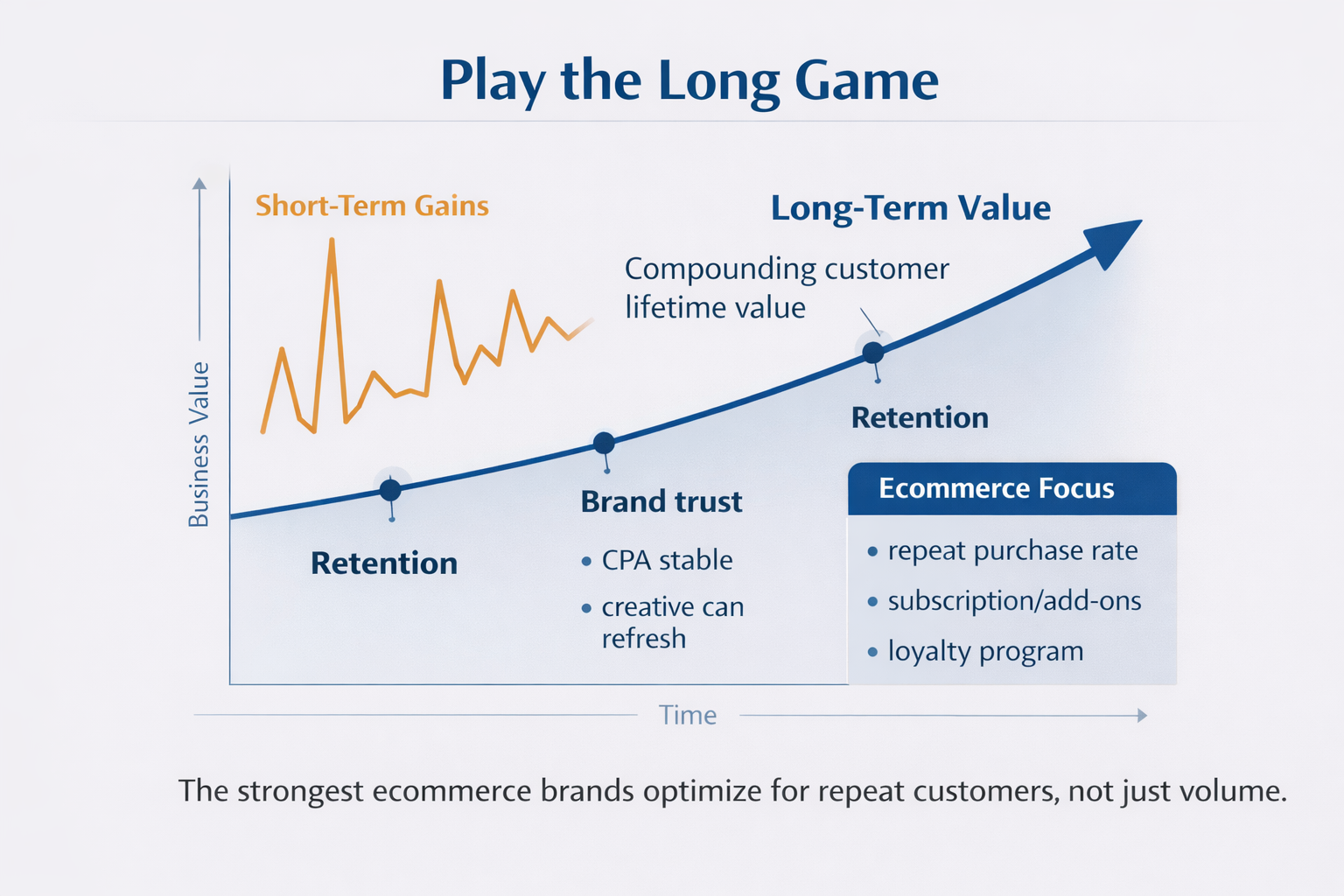
2. Long-Term Value Over Short-Term Gains
Li has held many investments for decades, focusing on sustainable value creation rather than quick flips.
Application to ecommerce:
- Build customer lifetime value, not just one-time sales
- Invest in brand building, not just performance marketing
- Focus on retention and repeat purchases
- Create sustainable competitive advantages
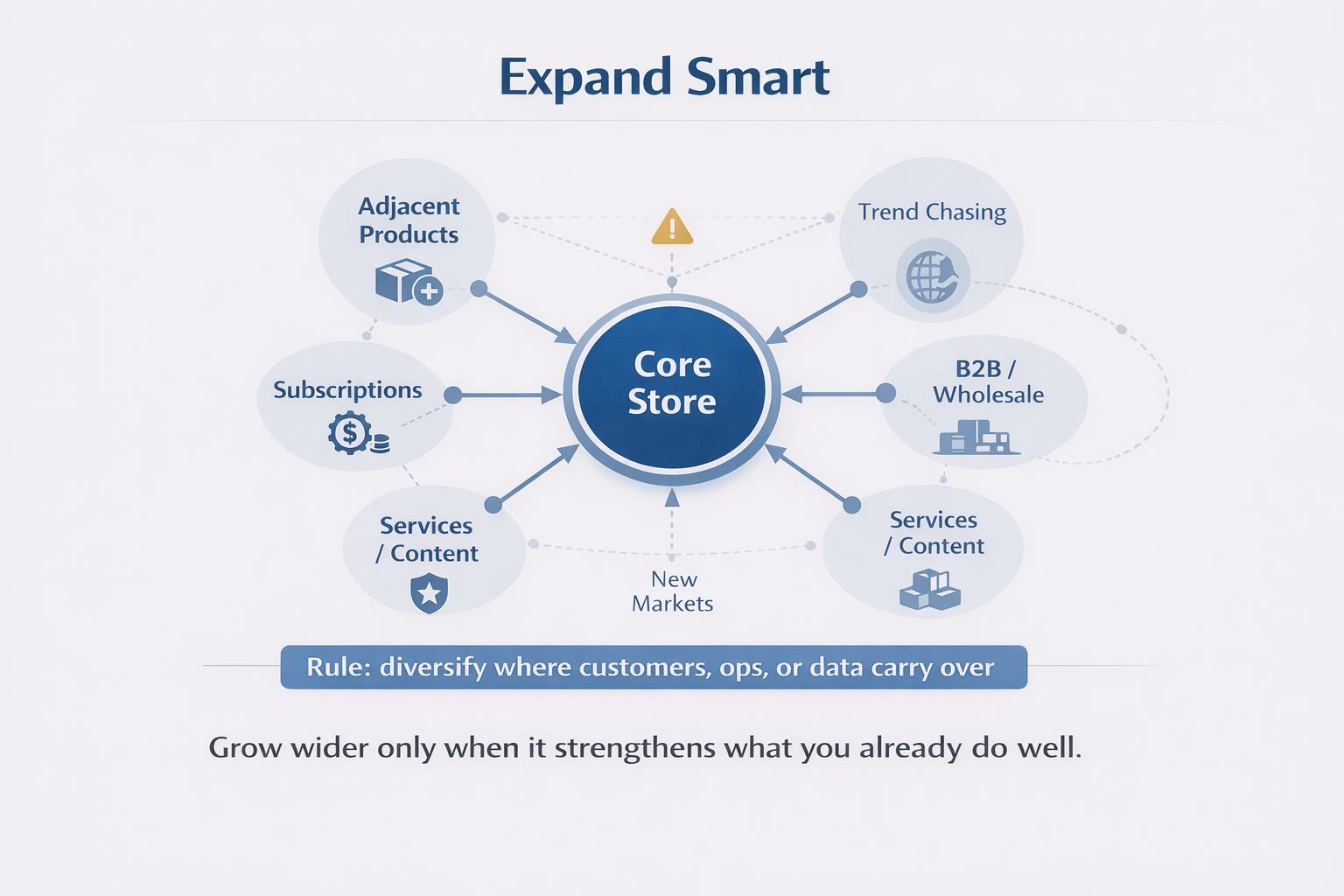
3. Diversification With Purpose
Li diversified across industries but always maintained operational synergies and expertise.
For online businesses:
- Expand product lines that serve your existing customers
- Don't diversify into completely unrelated niches without strategic reason
- Build complementary revenue streams (subscriptions, B2B wholesale)
- Leverage existing infrastructure and customer base
4. Cash Flow Is King
Li prioritizes businesses that generate consistent cash flow, allowing reinvestment and weathering downturns.
Ecommerce application:
- Monitor cash conversion cycles closely
- Negotiate favorable payment terms with suppliers
- Maintain healthy profit margins
- Build cash reserves before aggressive expansion
5. Adaptability and Continuous Learning
Despite his age, Li has continuously adapted to changing markets and technologies.
For founders:
- Stay current with ecommerce technology and trends
- Test new platforms and marketing channels
- Learn from younger consumers and emerging markets
- Don't become complacent with past success
How Li Ka-shing Dominates Retail: Strategies Ecommerce Brands Can Learn
Li's retail success through A.S. Watson Group provides specific lessons for ecommerce entrepreneurs:
Omnichannel Excellence
A.S. Watson has successfully integrated physical stores with digital platforms, creating seamless customer experiences.
Key tactics:
- Mobile apps with in-store pickup options
- Loyalty programs that work across channels
- Digital marketing driving foot traffic to physical locations
- Online inventory visibility for store stock
For pure-play ecommerce:
- Consider pop-up stores or retail partnerships
- Create showroom experiences in key markets
- Partner with brick-and-mortar for distribution
- Build click-and-collect capabilities if expanding to physical
Localization at Scale
Despite operating globally, each Watson brand adapts to local markets while maintaining operational efficiency.
Ecommerce application:
- Customize product assortments for different regions
- Adapt messaging and branding to local preferences
- Offer region-specific payment methods
- Respect cultural differences in customer service
Private Label Strategy
A.S. Watson generates significant margins through private label products across categories.
For ecommerce brands:
- Develop your own branded products alongside reselling
- Start with high-margin consumables or accessories
- Use customer data to identify white space opportunities
- Build brand trust before launching private label
Customer Data Mastery
With 130 million weekly customers, Watson leverages data for personalization and inventory optimization.
Actionable for online sellers:
- Invest in analytics and customer data platforms
- Personalize product recommendations
- Use purchase history for targeted email campaigns
- Optimize inventory based on predictive analytics
Li Ka-shing's Investment Strategy: Reading Market Cycles
One of Li's greatest skills has been timing market entry and exit points, particularly in real estate and infrastructure.
Buying Low, Selling High
Li famously sold significant Hong Kong property assets in 2013-2015 before the market peaked, then invested in European infrastructure when prices were depressed.
For ecommerce entrepreneurs:
- Recognize when your market is overheated (excessive valuations, unsustainable growth)
- Build during downturns when advertising costs are lower
- Acquire competitors or assets during industry contractions
- Don't overpay for acquisitions during boom times
Contrarian Thinking
While others panic-sold during crises, Li saw opportunities. During the 2008 financial crisis, he acquired valuable assets at discounts.
Application to online business:
- Launch when competition is weak
- Invest in marketing during economic slowdowns (lower CPCs)
- Acquire distressed inventory or businesses
- Don't follow the herd mentality
Global Diversification
Li shifted from Hong Kong-focused to global operations, reducing geographic risk.
For ecommerce:
- Expand to international markets early
- Don't rely on single marketplaces (Amazon, eBay)
- Diversify traffic sources and marketing channels
- Build multi-currency and multi-language capabilities
The Infrastructure Advantage: Li Ka-shing's Hidden Ecommerce Edge
Li's control of ports, telecommunications, and energy provides critical infrastructure for modern commerce.
Why This Matters for Ecommerce
Supply Chain Control:
- Li's ports move a significant percentage of global trade
- Owning infrastructure provides cost advantages and reliability
- Integration reduces dependency on third parties
Digital Infrastructure:
- Telecommunications assets enable mobile commerce
- Data centers and connectivity support online platforms
- 5G networks will drive next-generation shopping experiences
Lessons for Smaller Ecommerce Businesses
While you can't buy ports, the principle applies:
Control Your Critical Infrastructure:
- Own your customer data (don't rely solely on platforms)
- Build email lists and SMS databases
- Control your website and hosting
- Consider 3PL partnerships vs. owned warehousing based on scale
- Negotiate long-term contracts with critical suppliers
Vertical Integration Where Possible:
- Manufacture your own products if margins justify it
- Build in-house capabilities for critical functions
- Reduce dependency on single vendors
- Create sustainable competitive advantages
Li Ka-shing's Succession Planning: Building for Generational Wealth
Li formally retired from executive roles in 2018, passing control to his son Victor Li, while maintaining advisor positions.
Succession Best Practices
Gradual Transition:
- Victor worked in the business for over 30 years before taking control
- Phased handover of responsibilities
- Li remained available for strategic guidance
Clear Structure:
- Defined roles and responsibilities
- Professional management beyond family
- Transparent governance
For Ecommerce Founders
Even if you're not planning to retire soon:
Build to Sell or Scale:
- Document processes and systems
- Reduce founder dependency
- Hire strong leadership team
- Create transferable intellectual property
- Build brand value beyond your personal brand
Create Options:
- Structure business for eventual exit
- Develop multiple revenue streams
- Build assets that can be sold separately
- Maintain clean financials and legal structure
Current Challenges and How Li Ka-shing Adapts
Li's empire faces modern challenges that resonate with ecommerce entrepreneurs:
Political and Regulatory Uncertainty
Hong Kong's changing relationship with China has impacted Li's businesses, prompting strategic shifts.
Ecommerce parallel:
- Platform policy changes (Amazon, Facebook, Google)
- Data privacy regulations (GDPR, CCPA)
- International trade tensions and tariffs
Li's response:
- Diversified geographic exposure
- Reduced concentrated risk
- Built relationships across political spectrum
- Adapted compliance systems
Your response:
- Don't build entirely on rented land (platforms)
- Diversify across multiple channels
- Stay compliant with evolving regulations
- Build direct customer relationships
Digital Disruption of Traditional Retail
A.S. Watson's physical stores face competition from pure-play ecommerce.
Li's adaptation:
- Heavy investment in digital transformation
- Omnichannel integration
- Enhanced in-store experiences
- Leveraged data for personalization
Lesson:
- Continuously innovate your business model
- Embrace new technologies early
- Listen to changing customer preferences
- Don't protect legacy systems at the expense of growth
Generational Shifts in Consumer Behavior
Younger consumers shop differently than previous generations.
Li's approach:
- Acquired and partnered with digital-native brands
- Updated store formats and product assortments
- Enhanced mobile and social commerce capabilities
- Targeted Gen Z and Millennial preferences
For your ecommerce business:
- Understand your younger customers deeply
- Adapt to new platforms (TikTok, Instagram Shopping)
- Create content-driven commerce experiences
- Build community, not just transactions
Applying Li Ka-shing's Principles to Your Ecommerce Business
1. Patient Capital: Don't rush into investments without thorough validation. Test, measure, then scale.
2. Cash Flow Focus: Prioritize profitability and sustainable unit economics over vanity metrics.
3. Strategic Diversification: Expand thoughtfully into related products and markets, not random directions.
4. Infrastructure Ownership: Control your critical assets—customer data, inventory systems, brand equity.
5. Adaptability: Stay humble and keep learning. What worked yesterday may not work tomorrow.
6. Long-Term Thinking: Build for decades, not quarters. Customer lifetime value trumps short-term gains.
7. Market Timing: Understand cycles. Invest heavily when competitors retreat; harvest when markets peak.
8. Localization: Adapt to local markets while maintaining operational efficiency at scale.
9. Data-Driven Decisions: Use customer insights to optimize everything from inventory to marketing.
10. Build to Last: Create systems and culture that outlive you as founder.
Conclusion: Building Your Ecommerce Empire
Li Ka-shing's journey from factory worker to billionaire demonstrates that extraordinary success comes from consistent application of sound principles, not genius or luck alone. His retail empire, now serving over 130 million customers weekly through A.S. Watson and related holdings, proves that commerce businesses can scale to remarkable heights while maintaining profitability and adapting to changing markets.
For ecommerce entrepreneurs, the lessons are clear: focus on fundamentals, maintain financial discipline, adapt to change, and think long-term. You don't need to own ports or telecommunications companies to apply Li's philosophy. Whether you're running a six-figure Shopify store or building the next major ecommerce brand, these principles scale.
Start by asking yourself: Am I 90% certain about my next major investment? Am I building for sustainable cash flow? Am I adapting fast enough to market changes? Am I controlling my critical infrastructure?
Li Ka-shing didn't build his empire overnight it took seven decades of consistent execution. Your ecommerce success story starts with the same patient, principled approach today.
About the Author: Ben Ajenoui is the Founder of SEO HERO LTD, a Hong Kong–based SEO agency helping startups and established businesses improve search visibility, drive organic growth, and build sustainable online performance. He specialises in SEO strategy, technical optimisation, and content-led growth.
Sources:
- CK Hutchison Holdings Annual Reports (2023-2025)
- A.S. Watson Group Corporate Information
- Forbes Billionaire Rankings
- Business interviews and biographies of Li Ka-shing
- Market analysis from retail industry publications