
凝皓教育 Defining Education | Hong Kong, Facebook, & YouTube
凝皓教育 Defining Education: Why What You Post Online Matters as Much as What You Teach
When a parent in Hong Kong starts looking for academic support for their child, the first stop is rarely a phone call. It's a search. They'll look at a website, scroll through a Facebook page, maybe watch a YouTube video or two. By the time they actually make contact with a learning centre, they've already formed an opinion. For education brands like 凝皓教育 Defining Education, that silent first impression is where trust is either built or quietly lost.
Hong Kong's tutoring market is one of the most competitive in the world. Families take academic results seriously, and they're careful about where they spend their money. That means an education brand isn't just competing on curriculum or teacher quality it's competing on perception, communication, and how clearly it can demonstrate its value before a single lesson takes place.
The brands that understand this are doing something quite specific. They're not just posting for the sake of being active. They're using social media to show parents and students what learning actually looks like inside their classrooms.
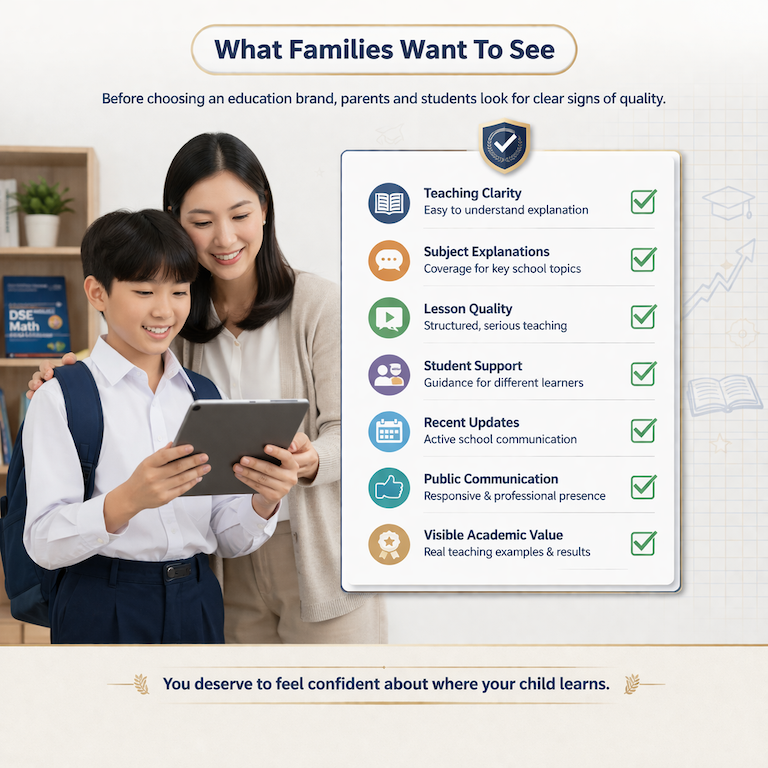
What Parents Are Really Looking For
Most parents checking a tutoring brand's Facebook page aren't looking for a sales pitch. They're looking for signals. Is this place actually doing something? Does it communicate clearly? Does it feel like a real school or just a logo on a website?
That might sound simple, but it cuts to the heart of what makes an education brand trustworthy in Hong Kong. Parents here are experienced consumers of academic services. They've seen the polished brochures and the promises about university placement. What they're increasingly looking for is something more honest evidence of day-to-day school life, the way a teacher explains a difficult concept, how a centre responds when a student is struggling before exams.
A Facebook post showing students working through a practice paper before the DSE, for example, does more than a banner advertisement. It's specific. It's real. And it tells parents something concrete about how the centre operates.
YouTube is where that proof becomes even more powerful. A short video where a teacher walks through a common grammar mistake, or breaks down a tricky maths problem step by step, gives prospective students a genuine preview of the teaching style. In a market where word-of-mouth has always been the most trusted form of recommendation, a well-made YouTube video is the next best thing and it reaches far more people.
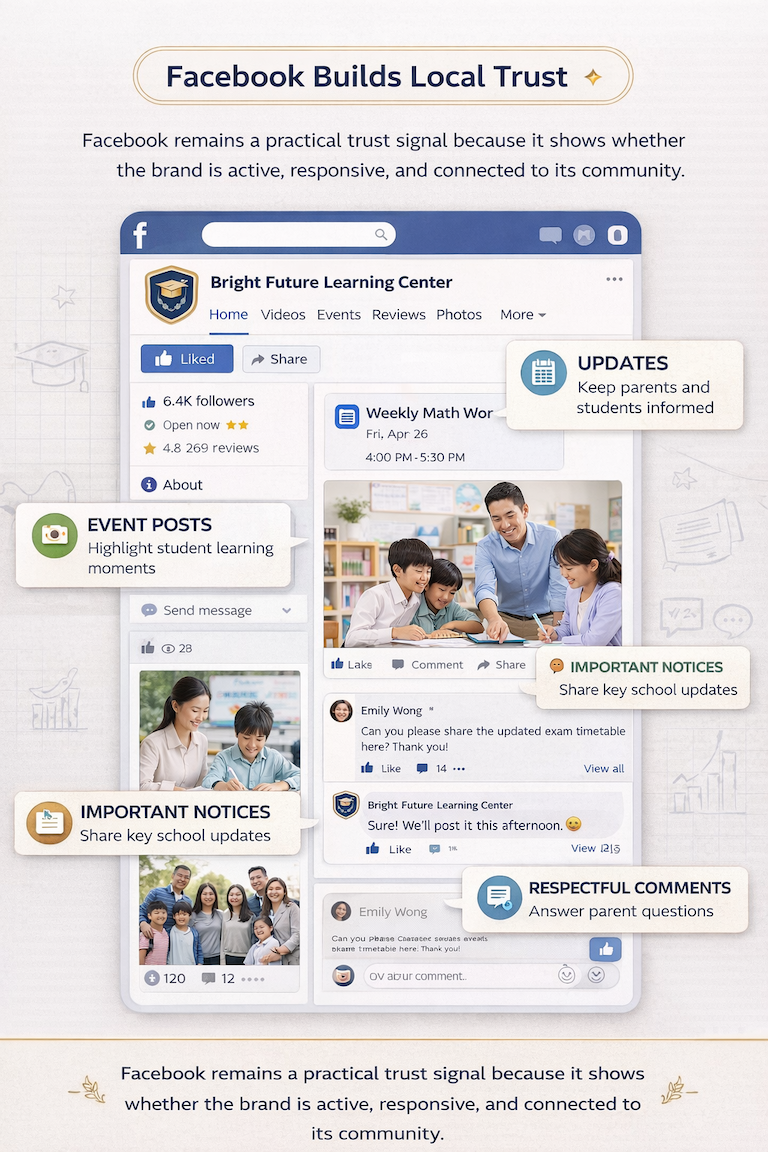
The Gap Between Having Platforms and Using Them Well
The honest challenge for many Hong Kong education brands isn't getting onto Facebook or YouTube. It's knowing what to actually do there.
Posting exam schedules and class timetables keeps a page technically active, but it doesn't help a parent understand why they should choose this centre over the one two streets away. Content that actually builds confidence tends to be more specific: a teacher sharing three things students always get wrong in Paper 2, a quick breakdown of how to approach an unseen passage, a short clip explaining the difference between two grammar structures that students consistently confuse.
This kind of content works because it gives something before asking for anything in return. It demonstrates teaching competence rather than just claiming it. And in a city where academic pressure starts young and parents are paying careful attention, that demonstration matters.
Defining Education has an interesting opportunity here. The brand name itself suggests clarity and direction a learning provider that is confident in how it explains things. The strongest version of its digital presence would reflect exactly that. Content that feels structured and purposeful, rather than occasional and promotional. Videos that show a teacher thinking through a problem rather than just presenting a polished solution. Updates that reflect the rhythm of a real school year the pre-exam preparation, the results season, the start of a new term.

Why Consistency Across Platforms Matters
One thing that tends to separate education brands that parents trust from those they scroll past is consistency. Not consistency in the sense of posting every single day, but consistency in voice, tone, and purpose.
If a brand sounds authoritative and clear on its website, but its Facebook page feels quiet and vague, parents notice the gap. If YouTube videos promise expert teaching but look unprepared, students notice that too. The overall impression that forms across platforms is more powerful than any single piece of content.
For a Hong Kong audience specifically, this also means language matters. Many families move between Cantonese and English naturally, and education brands that can communicate thoughtfully in both without making one language feel like an afterthought tend to feel more local and more approachable. It's a small detail, but it signals that the brand actually understands who it's talking to.
The Broader Point
There's a version of digital marketing in education that treats social media as a necessary chore something to be updated occasionally and forgotten about. And there's a version that treats it as an extension of the teaching itself, a way of demonstrating value to an audience that hasn't walked through the door yet.
The second version is harder to maintain, but it's the one that actually builds a reputation. In Hong Kong's education market, where parents are informed, students are discerning, and competition is constant, the brands that show their work literally and publicly are the ones that earn trust before the first lesson begins.
凝皓教育 already has a name that implies confidence and clarity. The question is whether its online presence says the same thing.