
Best coffee shops in Hong Kong for remote work
Hong Kong is a good city to work from a cafe, and a frustrating one. The good part is density, you are rarely more than a few minutes from somewhere that serves a flat white and has a free table. The frustrating part is that a lot of those tables are not built for a four-hour stretch with a laptop, two video calls and a charger trailing across the floor. Rents are high, turnover matters to the people running the place, and a counter that suits a quick takeaway crowd can be a poor fit for someone who needs to settle in and get work done.
This guide is for remote workers, freelancers and anyone between offices who wants a reliable spot rather than a gamble on the closest cafe. Instead of a ranked list of named venues that may have changed hands or changed their policy by the time you read this, it walks through what actually matters when you choose, how to read a place quickly, the etiquette that keeps you welcome, and what each district tends to offer. Use it as a checklist you can apply anywhere in the city.
Here are the top 3 Coffee Shops in Hong Kong
Elephant Grounds
Few coffee brands feel as authentically Hong Kong as Elephant Grounds. Founded in 2013, it started as a small coffee counter tucked behind a lifestyle shop and has grown into one of the city's most recognisable café brands built around house-roasted blends, freshly baked pastries, and its now-legendary ice cream sandwiches. The interiors follow a signature white-and-wood style with splashes of orange, keeping things calm and comfortable whether you're dropping in for a morning flat white or settling in for the afternoon.
For remote workers, Elephant Grounds has a lot going for it. There are multiple locations across Hong Kong Island including the main Roastery on Hollywood Road, a spot on Caine Road, and branches inside Pacific Place, K11 Musea, and Hysan Place so you're rarely far from one. The cafés run as all-day affairs, which means you can move from coffee and a croissant in the morning through to lunch without feeling rushed out. The atmosphere tends to be convivial rather than hushed, making it a good fit for focused solo work rather than back-to-back calls. Check the individual branch before committing, as the mall locations tend to be busier and more transient than the standalone spots.
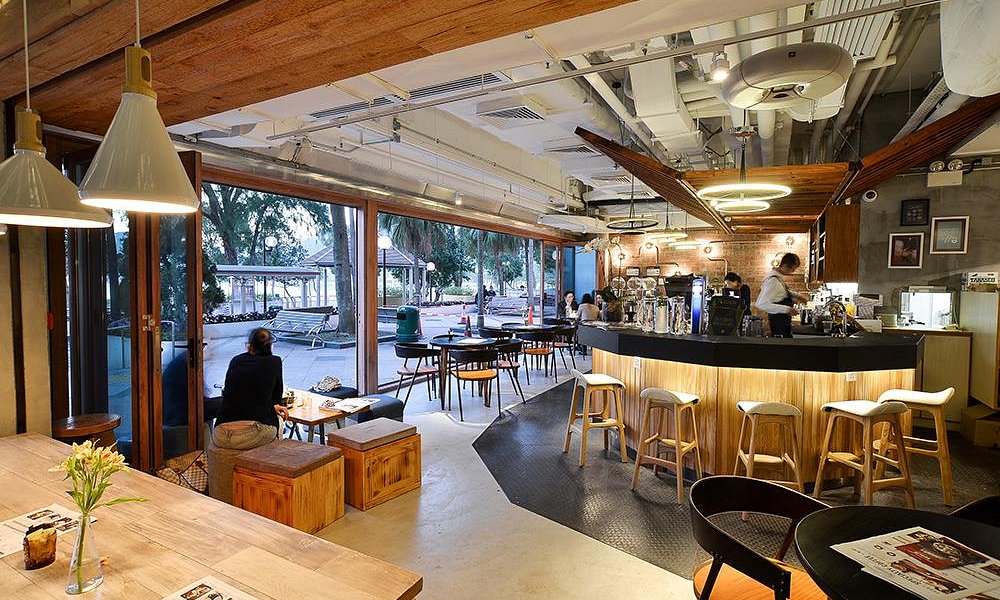
Source: TripAdvisor
The Coffee Academics
The Coffee Academics is one of Hong Kong's specialty coffee pioneers, founded in 2012 and now operating over 17 outlets across the city from Happy Valley and Wan Chai to HKU, Harbour City in Tsim Sha Tsui, and North Point. It has since expanded across Asia, but its roots and roastery remain firmly in Hong Kong, with beans roasted fresh at its Tuen Mun facility.
What makes it particularly well-suited to remote work is the combination of scale and substance. With so many locations spread across different districts, it's easy to build one into your regular rotation wherever you're based. The cafés typically open from 8am and run through to 6pm or later depending on the branch, giving you a solid working window. Seating tends to be spacious by Hong Kong standards, the food menu is broad enough to carry you through lunch, and the coffee quality is consistently high. If you want a reliable, comfortable base without having to scout a new spot every time, The Coffee Academics is one of the safest bets in the city.
Sipper Coffee
Sipper Coffee is a small, specialty-focused café tucked into Kennedy Street in Wan Chai easy to walk past, worth making the effort to find. The credentials behind the counter are serious: the team has ranked at the World BrewersCup and taken silver at the Hong Kong Brewers Cup twice, and that level of attention to extraction shows in the cup. Expect precise, flavour-forward coffee rather than a standard espresso menu.
It's worth being upfront about its fit for remote work: Sipper is primarily a takeaway and neighbourhood café rather than an all-day workspace. Opening hours run 9am to 6pm on weekdays and 10am to 6pm on weekends, and seating is limited. Prices are low well under HK$50 for most drinks which reflects its grab-and-go character. That said, it earns a place in this guide as the kind of quality coffee stop that makes a working day feel worthwhile. If you're based in Wan Chai or passing through, it's an excellent place to pick up a genuinely exceptional brew before heading somewhere with more room to spread out.
What to look for before you commit to a table
A cafe can look perfect and still be wrong for work. The espresso might be excellent and the playlist tasteful, but if there is one socket and it is behind the counter, you will be packing up in ninety minutes. Run through the points below before you order. If you want a shortlist to test them against, the Coffee Shops in Hong Kong category on Shareit lists options across the city. Most take a glance to check, and the habit saves you the slow misery of realising at minute forty that the place will not last the afternoon.
Reliable wi-fi
This is the one that decides everything else. A cafe with weak or capped wi-fi is not a workspace, however nice the coffee, so run a quick speed test on your phone before you unpack. You want something stable rather than headline-fast: roughly 10 Mbps down and a few up is enough for calls, file syncing and browsing, and a connection that holds steady beats one that spikes then stalls. Two local quirks are worth watching. Basement cafes in older buildings sometimes lean on a single router that struggles once the room fills, and mall venues occasionally route guests through a network with a login wall and an hourly limit. Either way, carry a mobile plan with a decent data allowance as backup, because coverage above ground is strong almost everywhere here.
Power sockets you can actually reach
Battery anxiety ruins focus, so scan the walls and the floor for outlets before you choose a seat, not after. The best work cafes put sockets along bench seating or under a communal table; the worst have them only behind the bar. Counter seating along a window is often the sweet spot, since it pairs a socket with good light. If you work out regularly, carry a short extension lead so you can take a comfortable seat rather than the one chair next to the only free socket. Hong Kong uses the UK-style three-pin plug, so if you have arrived from elsewhere, pack an adapter.
Comfortable seating for the long haul
A stool is fine for a coffee and punishing for a working day, so think about what your body will feel like at hour three. A proper chair with back support, a table at roughly desk height, and enough elbow room that you are not knocking your neighbour's cup are worth more than any latte art. Bar-height counters work if the stools have a footrest and a back, but a low lounge sofa forces you to hunch over a screen. Space is tight across most of the city, so favour communal tables. They give each person more usable surface than a cluster of tiny two-tops, and they are usually the only setup with room for a laptop stand and a separate keyboard.
Noise level and the right kind of busy
Total silence is rare in a cafe and not really the goal. A steady hum of background chatter helps a lot of people concentrate and covers the sound of their own typing. What breaks focus is sharp, unpredictable noise: a blender every few minutes, a sound system turned up for atmosphere, a small room where one loud table dominates. If you take calls, sudden noise is worse than constant noise, because your microphone picks up the spikes. So read the room first. A cafe half full of people quietly reading or typing will probably stay calm, while one full of groups catching up gets louder as it fills. Bring noise-cancelling headphones either way. They are the single most useful piece of kit for cafe work, and they signal that you are heads-down.
Laptop-friendly policies
Some cafes welcome laptop workers, some quietly do not, and a few say so on a sign by the door. None of this is hostile; it is a business deciding how to use a small number of seats. The friendly signals are easy to spot: visible power sockets, other people working, communal tables, posted wi-fi details. The opposite signals matter just as much. A small room with a queue out the door at peak times is telling you, without a sign, that lingering is not welcome at noon, and a cafe with no sockets and only counter stools has made a choice about turnover. Respect it and move on, because there is always another option a short walk away.
Opening hours that match how you work
Hours vary more than you might expect. Plenty of independent Hong Kong cafes open around 8 or 9am and close by 6pm, which suits a standard day but leaves early risers and evening workers stranded. If you keep unusual hours, perhaps coordinating with a team in another time zone, check closing times before you build a routine around a place. For early starts, a few chains and hotel-lobby cafes open earlier and stay open later, dependable even if the coffee is unremarkable. For late sessions your options narrow toward a 24-hour fast-food outlet or a co-working day pass. Knowing the hours of three or four spots near you, rather than one, means a closed door never derails your day.
Minimum spend and the cost of a seat
Some cafes, especially busier ones and those in malls, apply a minimum spend or a time limit during peak hours. It might be posted, or it might be a gentle word from staff once you have nursed one americano for two hours. Either way it is fair: you are renting a seat in one of the most expensive cities in the world, and the price is a drink or two and the courtesy of ordering again when your cup is empty. Budget for at least two orders across a three or four hour session, plus food if you stay through a mealtime. It is still far cheaper than a hot desk, and cafes with a full menu make it easier.
Etiquette for long stays
The reason some cafes turn cold on laptop workers is that a few have abused the welcome. You can be the kind of customer that keeps a place laptop-friendly, and it costs almost nothing. The rule of thumb: leave the space at least as good as you found it, and never make staff feel you are taking something for nothing.
- Order at a fair rate. Roughly one drink every ninety minutes to two hours is a reasonable rhythm, plus food if you settle in for the afternoon. An empty cup sitting in front of you for three hours is the clearest signal that you are overstaying.
- Read the room at peak times. If a queue forms and people are hovering for seats, that is the moment to take calls outside or wrap up. Holding a four-person table to yourself during the lunch rush is the fastest way to make a cafe regret its open-door policy.
- Take loud or sensitive calls elsewhere. A quiet voice note is fine; a forty-minute video meeting on speaker is not. Step outside, use the lobby, or book the call into a quieter slot. The other customers did not sign up for your standup.
- Keep your footprint small. One person does not need a four-top at a busy time, cables should not cross a walkway where someone could trip, and you should clear your own table when you leave.
- Tip and be pleasant. Tipping is less expected in Hong Kong than in some places, but rounding up for staff who let you camp all afternoon buys a lot of goodwill. Learn the names of the people behind the counter at your regular and the welcome warms considerably.
None of this is complicated. It comes down to treating the cafe as a host rather than a utility, and if you do, you can return to the same handful of places for years.
District by district guidance
Where you base yourself changes the experience completely. Central is convenient but pricey and crowded, while quieter neighbourhoods trade footfall for calm and space. Here is how the main areas tend to feel for working, so you can match a district to the day you need. None of this is a guarantee about any single venue, but the character of each area is fairly consistent.
Central
Central has the highest concentration of cafes in the city and the highest competition for seats. Speciality coffee is everywhere, the wi-fi tends to be good because the clientele expects it, and you are surrounded by other professionals doing the same thing. The trade-off is the lunch rush: between roughly noon and 2pm, minimum spends and time limits appear, and a place that felt calm at 10am turns into a scramble. The play here is to arrive early, claim your spot before the office crowd spills out, then clear out or shift to lighter work over lunch. Look toward the quieter upper streets and the lanes off the main drag rather than the cafes beside the busiest MTR exits. Mid-Levels, just up the escalator, is calmer than the waterfront core and still well supplied.
Sheung Wan
Sheung Wan, just west of Central, is one of the better areas for laptop work and a favourite of the freelance and creative crowd. It carries much of the same speciality coffee quality but with a calmer pace and a higher chance of a table that suits a long sit. The crowd skews toward designers, writers and small studios, so the cafes are used to people working. The streets around Tai Ping Shan and the gallery district are worth exploring on foot, with smaller rooms that have character, communal tables, and owners who recognise regulars. This is the answer when Central feels too frantic but you still want a short commute and good coffee.
Wan Chai
Wan Chai mixes old Hong Kong with new towers, and its cafes reflect that range, from polished modern spots near the office blocks to small, well-worn places tucked into the older streets toward the market. It is less saturated than Central, so seats are a little easier to come by, and the streets toward the south of the district stay quieter through the day. Wan Chai also has plenty of cafes that serve a full menu, which suits a session that runs through lunch. If you like to fold a proper meal into your working day without changing venues, this is fertile ground, and many of these spots double as solid restaurants in their own right.
Tsim Sha Tsui
Across the harbour, Tsim Sha Tsui is dense, busy and tourist-heavy, which shapes the cafe scene. Many spots cater to a transient crowd, so turnover is high and not every venue is set up for lingering. The upside is choice and long hours, since an area built around hotels and shopping stays open later than a sleepy residential street would. The hotel lobbies along the waterfront are an underrated option: calm, with reliable wi-fi and comfortable seating, and nobody rushes you, though you pay for it in the coffee price. Away from the tourist core, the streets toward Jordan hold quieter neighbourhood cafes. TST works well if you need long hours and do not mind a livelier backdrop.
Kowloon beyond TST
Push north and inland into the rest of Kowloon and the picture shifts toward local life and lower prices. Mong Kok and Yau Ma Tei are intense and crowded at street level, but the wider area rewards exploration. Districts such as Kowloon City, Sham Shui Po and the residential parts of Kowloon Tong have a growing number of independent cafes serving a neighbourhood crowd rather than tourists. Rents are lower, so a cafe can afford to let you sit longer without the same pressure on the table, and menu prices follow suit. The speciality coffee scene has spread well beyond Hong Kong Island, so if you live in Kowloon there is little need to commute across the water just to find a good place to work.
Quieter neighbourhoods and the outlying options
If your work needs deep focus and you do not need to be central, the calmer corners of Hong Kong are worth the longer trip. The south side of Hong Kong Island, around Aberdeen, Wong Chuk Hang and the village pockets, has a slower pace and a handful of roomy cafes that rarely fill the way Central does, and Wong Chuk Hang in particular has grown an arts and design cluster with a work-friendly tone. Further out, Sai Kung, Tai Po and the towns of the New Territories give you space, lower prices and a relaxed atmosphere. The coffee scene is thinner, but the cafes that exist are often generous with seating and time, since they are not fighting a constant queue. These areas suit the writer on a deadline or anyone whose work is solitary and call-light. The trade-off is the commute and a thinner safety net of backups, so they reward planning over spontaneity.
How to find a good spot, fast
Even with the district map in your head, you still have to choose a specific cafe on a given morning. Run the two-minute check from earlier as soon as you sit down, and work the calm mid-morning and mid-afternoon windows when you can. Beyond that, three habits do most of the work.
- Scout before you need it. When you pass a promising cafe, step in, note the sockets and seating and whether people are working, and file it away. A mental shortlist beats a desperate search at 9am with a deadline looming.
- Read reviews for the practical details. Photos and comments often reveal sockets, wi-fi quality, noise and how strict a place is about laptops, which the cafe's own page rarely mentions. A listing with real photos tells you more about workability than a glossy promo shot.
- Build a rotation, not a favourite. Keep three or four trusted spots within walking distance of each other, and know where the nearest quiet corner or lobby is for a sudden call, so your day never hangs on a single door being open.
Over a few weeks this becomes second nature. You stop thinking about where to work and start simply working, and the city has more than enough good cafes to support that once you know how to read them.
One honest caveat. Cafes suit focused solo work, writing, reading and light admin, but they have limits. You do not control the noise, you cannot leave a laptop on the table while you visit the bathroom, and back-to-back video calls are awkward at best. Save the call-heavy or security-sensitive days for home, a library, or an occasional co-working day pass. The best remote workers here match the place to the task rather than forcing one setup to do everything.
Start scouting your spot
Finding the right cafe to work from in Hong Kong is less about chasing a single famous address and more about knowing what to look for and where to look. Check the wi-fi, find the sockets, judge the seat and the noise, respect the etiquette of a long stay, and pick a district that fits the day ahead. Do that, and the city's density turns from a frustration into an advantage.
When you are ready to find your next regular, browse the Coffee Shops listings and speciality roasters on Shareit to see what is available across Hong Kong's neighbourhoods, compare the practical details, and shortlist a few places worth a visit. Then build your rotation, settle in, and get to work.